
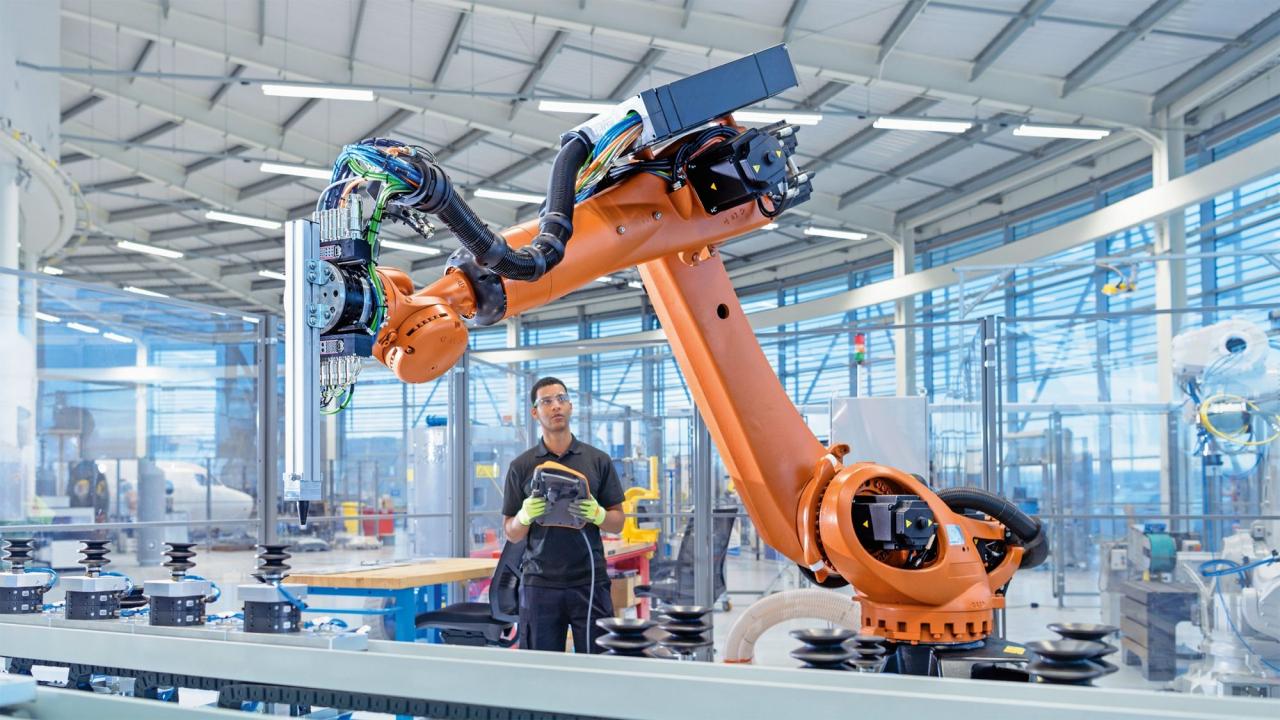
The global manufacturing sector is undergoing its most radical transformation since the Industrial Revolution. Driven by relentless demands for higher efficiency, unmatched precision, and the necessity to counteract volatile labor costs, the Factory Automation Robotics Market has surged from a specialized niche into a multi-trillion-dollar core industry by 2025. This explosion is not merely about replacing human labor; it’s about establishing the digital, hyper-efficient, and resilient production lines of the future.
The Unstoppable Ascent: Decoding the Factory Automation Robotics Market Boom

This comprehensive, over 2000-word deep dive meticulously analyzes the Factory Automation Robotics Market explosion. We explore the specific technological breakthroughs driving adoption, the critical economic incentives attracting massive corporate investment, the key market segments poised for exponential growth, and the essential strategic roadmap required for manufacturers to implement these complex, high-value systems successfully. Understanding this shift is vital for any entity operating within the modern industrial ecosystem.
Technological Triumphs Driving Market Expansion
The current robotics revolution is fundamentally different from previous waves, marked by increased intelligence, flexibility, and connectivity.
A. The Rise of Smart Robotics and AI Integration
Modern factory automation relies on robots that are not just mechanical arms but highly intelligent, learning machines integrated with the digital enterprise.
A. Collaborative Robots (Cobots): Cobots are arguably the biggest market catalyst. Designed to work safely alongside humans without safety cages, they are flexible, easy to program, and have democratized automation, making it accessible to Small and Medium-sized Enterprises (SMEs). Their focus on safe human-robot interaction solves the historical problem of spatial inefficiency in traditional automation cells.
B. AI and Machine Learning for Optimization: Artificial Intelligence (AI) powers the next generation of industrial robots. AI enables robots to learn from errors, adapt to changing product specifications, optimize path planning in real-time (saving energy and time), and perform complex tasks like variable object picking (vision-guided robotics) that were previously exclusive to human dexterity.
C. Vision Systems and Sensor Fusion: High-definition 3D vision systems, combined with advanced sensor fusion (integrating lidar, tactile sensors, and force-torque sensors), give robots human-like perceptive capabilities. This allows for unparalleled precision in quality control (defect detection) and complex assembly tasks with tight tolerances.
B. The Infrastructure of Connectivity: Industry 4.0
The full potential of robotics is only realized when integrated into a unified, intelligent manufacturing ecosystem—the core of Industry 4.0.
A. Industrial Internet of Things (IIoT): Robots are now essential nodes within the IIoT network, continuously generating data on performance, utilization, and maintenance needs. This data is the fuel for predictive maintenance algorithms, dramatically reducing unexpected downtime (a major B2B concern).
B. Edge Computing: To enable real-time decision-making (critical for high-speed assembly and safety-critical operations), computational power is moving from the centralized cloud to the “edge”—the factory floor. This low-latency processing capability is vital for complex robotics functions like instantaneous collision avoidance and path correction.
C. Digital Twins: Manufacturers are creating Digital Twins—virtual replicas of their physical factory floor and robotic cells. These twins allow engineers to simulate and optimize robot performance, test new production layouts, and debug software updates before deploying them physically, significantly reducing commissioning time and risk.
Economic Drivers and Investment Incentives
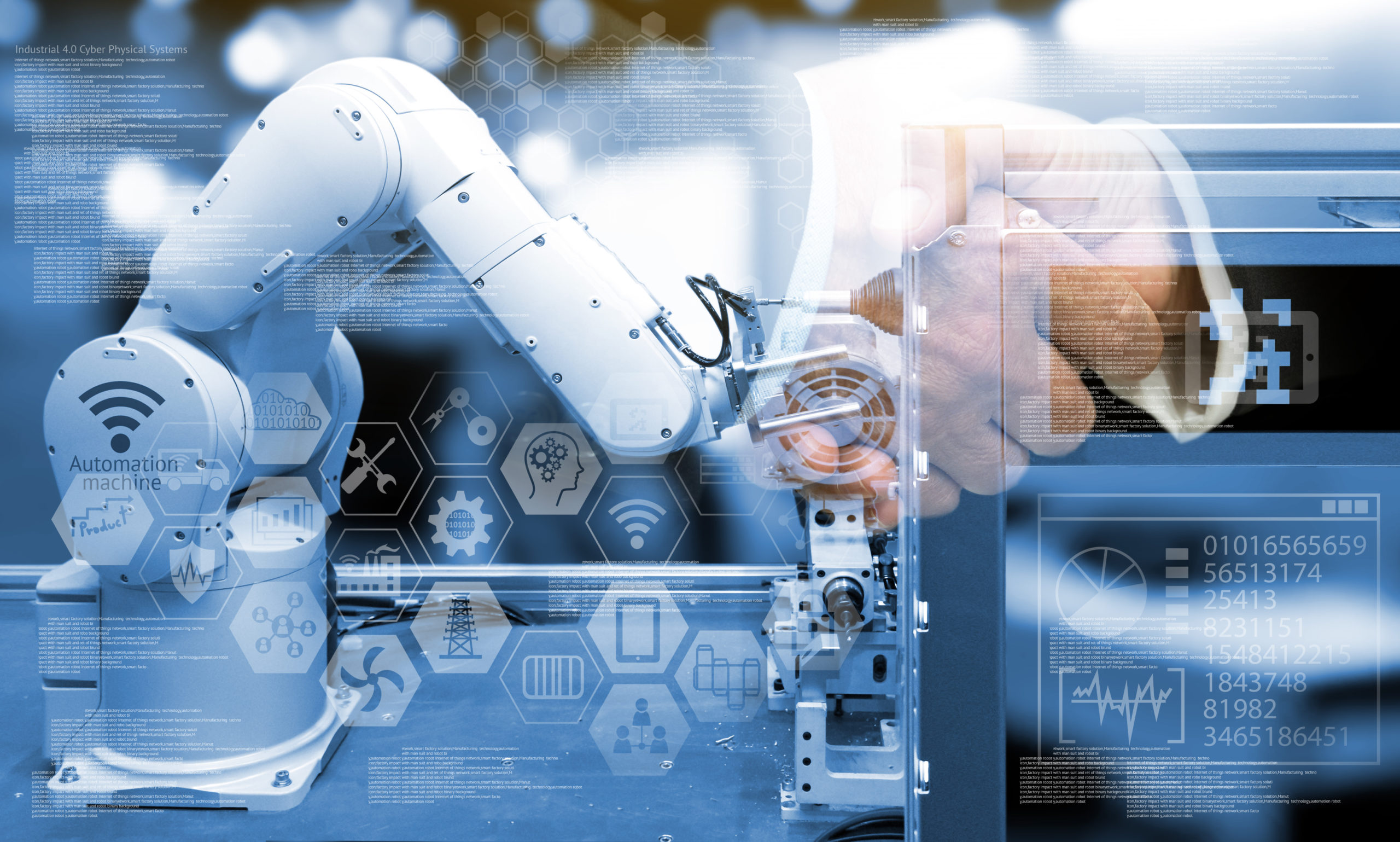
The massive funding flowing into the robotics sector is driven by compelling economic necessities and the pursuit of competitive advantage.
1. ROI and Productivity Gains
The primary metric for investment is the verifiable Return on Investment (ROI) generated by increased productivity and reduced costs.
A. Labor Cost Mitigation: Robotics directly addresses rising global labor costs and skills shortages, providing predictable operational expenditure and consistent quality independent of human factors. The ROI calculation often centers on the rapid payback period resulting from reduced variable labor costs.
B. Increased Throughput and Cycle Time Reduction: Robots operate continuously and often significantly faster than humans, enabling 24/7 production and massive increases in overall throughput. This cycle time reduction is paramount in high-volume industries like automotive and electronics.
C. Waste Reduction and Quality Control: The precision of robotic systems leads to near-zero tolerance for error. Superior robotic vision systems detect microscopic defects that human inspection misses, leading to immediate reductions in material waste and warranty claims (a huge cost center).
2. Market Segmentation and High-Value Verticals
Investment is heavily concentrated in specific industrial sectors where the economic benefits are greatest.
A. Automotive and EV Manufacturing: Robotics is the backbone of Electric Vehicle (EV) and battery production. The precision required for battery module assembly and the scale of EV chassis welding necessitate complete robotic automation, making this the largest spending segment.
B. E-commerce and Logistics Automation: The explosion of e-commerce has led to unprecedented demand for automated warehouses and fulfillment centers. Robots handle complex tasks like package sorting, shelf-picking (bin picking), and palletizing, a segment attracting high-value logistics and supply chain software advertisers.
C. Life Sciences and Pharmaceuticals: The need for sterile, consistent, and traceable production environments in drug discovery and manufacturing (handling delicate cell cultures or filling vials) makes robotics indispensable for compliance and quality control.
The Strategic Roadmap for Successful Automation
Implementing factory automation is a complex, high-risk undertaking requiring strategic planning beyond simply purchasing hardware.
1. From Pilot to Scalable Enterprise Solution
A successful transition requires meticulous planning, integration, and training.
A. Feasibility Assessment and Simulation: Before any purchase, manufacturers must conduct detailed feasibility studies and virtual simulations using tools like Digital Twins to accurately model the expected performance, identify bottlenecks, and calculate the ROI under various operating conditions.
B. Vendor Selection and Ecosystem Integration: Choosing the right robot manufacturer (e.g., Fanuc, ABB, KUKA) is less important than selecting vendors with robust integration capabilities. The chosen system must communicate seamlessly with existing ERP (Enterprise Resource Planning), MES (Manufacturing Execution System), and quality control systems.
C. Training and Reskilling: The successful integration of robots mandates a transition plan for the human workforce. Investment must be made in reskilling programs to train existing employees to become robot programmers, maintenance technicians, and data analysts—creating high-value, high-salary jobs and addressing a critical labor concern.
2. Software and System Architecture (High CPC Focus)
The value of the robotic system is increasingly tied to the sophistication of its software and data analytics platform.
A. Standardized Communication Protocols: Relying on standardized protocols like OPC-UA ensures seamless, vendor-agnostic data exchange between robots and higher-level enterprise systems, avoiding costly proprietary integration pitfalls.
B. Cybersecurity of Industrial Control Systems (ICS): Robots and their controllers are a critical part of the ICS network. Robust cybersecurity protocols, including network segmentation and real-time anomaly detection, are mandatory to protect production lines from intellectual property theft and malicious shutdowns—a core focus for B2B security consulting ads.
C. Predictive Maintenance Platforms: Investing in AI-driven predictive maintenance software that analyzes robot vibration, temperature, and motor current data to schedule repairs before a catastrophic failure occurs, maximizing uptime and reducing total operational cost.
Market Dynamics, Investment, and Digital Strategy
The market’s competitiveness is intensifying, dictating aggressive investment in both technology and targeted digital visibility.
1. Investment Trends and Mergers
A. Venture Capital in AI Robotics: Investment is heavily focused on startups developing software layers: vision systems, motion planning algorithms, and AI controllers that enhance the flexibility and intelligence of existing robot hardware.
B. Consolidation and Acquisition: Large industrial conglomerates are actively acquiring specialized robotics companies (integrators, software providers) to consolidate expertise, accelerate time-to-market, and capture vertical market dominance.
C. Robotics-as-a-Service (RaaS): The RaaS model is gaining traction, particularly with SMEs. Companies pay a monthly fee for the robot, maintenance, and software updates, dramatically lowering the upfront capital expenditure barrier and expanding the market base.
2. Targeting High-Value Search Queries (SEO/AdSense)
To capture the lucrative B2B audience, content must be technically deep and solution-focused.
A. Industrial AI and Enterprise Integration: Targeting queries such as “AI-driven quality control software ROI,” “cost of ERP integration with FANUC robots,” or “consulting for Industry 4.0 transformation.” These searches come from executives and engineers with large budgets.
B. Cobots and Safety Compliance: Focus on the compliance and safety aspects, such as “ISO 10218 safety standards for cobots” or “integrating cobots with legacy machinery.” Compliance and safety are non-negotiable B2B costs, attracting high ad spending.
C. Vertical Market Solutions: Creating authoritative content specific to industry pain points, like “robotics for micro-assembly in electronics” or “sterile robotic systems for pharmaceutical compounding,” establishes niche authority and draws highly qualified, segment-specific leads.
Conclusion
The current explosion in the Factory Automation Robotics Market is far more than a cyclical upgrade; it is a foundational investment in manufacturing resiliency and sustainable competitiveness. By 2025, robots—particularly highly intelligent Cobots and AI-driven autonomous systems—are no longer optional luxury items but the essential operational backbone for any manufacturing entity aiming for world-class quality, zero-downtime productivity, and cost stability. The integration of these systems into the broader Industry 4.0 framework, leveraging IIoT, Edge Computing, and Digital Twins, provides manufacturers with an unprecedented ability to analyze, adapt, and optimize their entire global supply chain in real-time.
This immense technological and financial undertaking has created a highly lucrative digital content environment. Advertisers—including major industrial software vendors (ERP, MES), sophisticated systems integrators, B2B cybersecurity firms specializing in ICS (Industrial Control Systems), and RaaS (Robotics-as-a-Service) providers—are competing fiercely for search visibility. Consequently, content that offers deep, technical guidance on topics like predictive maintenance implementation, OPC-UA integration, and advanced vision system calibration commands exceptionally high CPC rates.
Ultimately, the competitive advantage in modern manufacturing hinges on successful strategic automation. Companies that master the complex blend of mechanical engineering, AI programming, and enterprise system integration, while simultaneously committing to workforce reskilling, will be the undisputed market leaders. The robot revolution is secure, and those who provide the technical knowledge and solutions necessary to navigate it are positioned for maximum digital revenue generation.