The race to commercialize truly autonomous vehicles (AVs) has moved past the initial hype cycle and entered a phase of aggressive, focused investment. After a period of measured caution, the global financial landscape is witnessing a monumental surge in capital flowing into driverless technology. This resurgence in funding, often in the form of massive, later-stage rounds, is a powerful indicator that investors now see a clearer path to profitability and large-scale deployment, particularly within the lucrative commercial and logistics sectors.
The focus has decisively shifted from demonstrating capability to achieving scalable, cost-effective operations, transforming AVs from futuristic concepts into tangible, high-value assets. This article will delve into the driving forces behind this investment spike, the technological bottlenecks being unlocked, and the ultimate financial implications for the future of transportation and technology stocks. The total addressable market is staggering, making driverless technology one of the most compelling investment narratives of the decade.
I. The Financial Revaluation of Autonomous Systems
The autonomous vehicle market, encompassing everything from passenger robotaxis to Level 4 autonomous trucks, is undergoing a significant financial revaluation. Early-stage valuations were speculative; today’s capital infusion is based on concrete operational metrics and regulatory milestones.
A. Shift from Volume to Value in Funding Rounds
Analysis of the recent investment landscape reveals a critical trend: while the sheer number of funding rounds might have stabilized or even slightly decreased, the average size of each late-stage funding round has skyrocketed. This is indicative of a market maturing where only the most robust, capital-intensive frontrunners—those capable of scaling real-world operations—are securing major financial backing. Investors are consolidating their bets, favoring proven technology stacks and strong operational teams over fragmented, unproven concepts. This signifies a movement away from “proof-of-concept” capital toward “scaling-for-profit” capital.
B. Commercial and Logistics Sectors as Profit Drivers
The investment thesis is no longer centered solely on the personal passenger car, which faces steep regulatory and consumer adoption hurdles. Instead, the immediate financial reward lies in controlled, predictable commercial environments.
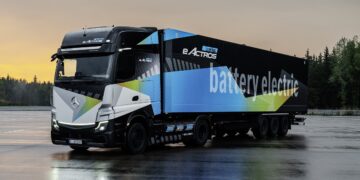
A. Autonomous Trucking: Long-haul trucking presents the clearest near-term revenue stream. The removal of the human driver directly addresses the massive operating costs associated with labor shortages, driver fatigue, and regulatory hours-of-service limitations. Investment in autonomous heavy-duty vehicles, particularly for hub-to-hub highway routes, has seen an exponential increase.
B. Robotaxi Services: While passenger transport is more complex, Level 4 robotaxi services operating within defined “Operational Design Domains” (ODDs)—such as geofenced city centers—are now generating meaningful revenue. Funding is aimed at expanding ODDs, increasing fleet size, and optimizing fleet management software to maximize vehicle utilization, which is the key to economic viability.
C. Last-Mile Delivery: Autonomous ground vehicles (AGVs) and specialized delivery vans for fixed-route logistics offer high-frequency, low-speed automation, attracting specialized capital focused on e-commerce logistics optimization.
C. Market Size and Growth Projections
The bullish sentiment is supported by staggering market projections. The global autonomous vehicle market size is forecasted to climb into the trillions of dollars within the next decade, accelerating at a Compound Annual Growth Rate (CAGR) exceeding 30%. This massive growth potential is the magnetic force drawing institutional and venture capital, as the returns for early movers are expected to be disproportionately large. The United States and China remain the epicenters of this investment, fueled by intense technological competition and supportive regulatory sandboxes.

II. Technological Pillars Justifying Massive Capital Deployment
The financial sector’s confidence is a direct reflection of underlying technological breakthroughs that have transformed once-insurmountable engineering challenges into solvable problems.
A. The Dominance of Artificial Intelligence (AI) and Machine Learning (ML)
At the heart of the driverless revolution is advanced AI. Massive investment is being channeled into developing and refining the software that enables truly intelligent driving.
A. Deep Neural Networks (DNNs): These complex algorithms, trained on petabytes of real-world and simulated driving data, are now highly effective at environmental perception, object detection, and path planning. Investment is crucial for running the colossal computing infrastructure required for training these models.
B. Real-Time Decision Making: AI systems are transitioning from purely reactive systems to highly predictive models that can anticipate the actions of human drivers, pedestrians, and cyclists. This leap in predictive capability is essential for safety, and therefore, for regulatory approval and public trust.
C. Explainable AI (XAI): A major investment area is XAI, which is necessary to provide transparency into the autonomous system’s decision-making process. This is vital for addressing ethical concerns (e.g., in accident scenarios) and for meeting stringent regulatory requirements globally.
B. Sensor Cost Reduction and Sensor Fusion Mastery
The hardware required for autonomy—particularly LiDAR, Radar, and high-resolution cameras—was prohibitively expensive just a few years ago. Significant capital is accelerating the cost-curve decline.
A. Affordable LiDAR: Next-generation LiDAR (Light Detection and Ranging) systems, particularly solid-state and MEMS-based units, are now available at a fraction of the previous cost. This industrial scaling makes Level 4 autonomy commercially viable.
B. High-Performance Radar: Advanced radar technology is increasingly used to supplement vision and LiDAR, especially in adverse weather conditions (heavy rain, snow, fog), offering a critical layer of redundancy.
C. Sophisticated Sensor Fusion: Investment focuses on the software algorithms that seamlessly merge the data streams from all these sensors. This fusion creates a comprehensive, 360-degree, three-dimensional model of the environment that is far more reliable than any single sensor type, ensuring “fail-operational” redundancy.
C. Edge Computing and Onboard Processing Power
AVs must process enormous amounts of data in real-time on the vehicle itself—a process known as edge computing.
A. Dedicated AV Chips: Chip manufacturers are attracting billions in capital to design specialized, energy-efficient silicon optimized specifically for the unique demands of autonomous driving AI models. These powerful chips are essential for quick, safe decision-making without relying on cloud latency.
B. Over-the-Air (OTA) Updates: Investment supports the development of robust software infrastructures that allow AV fleets to receive remote updates, patches, and new features, much like a smartphone. This constant improvement capability is necessary for continuous safety enhancement and for unlocking new geographic ODDs.
III. The Path to Commercialization: Levels 4 and 5
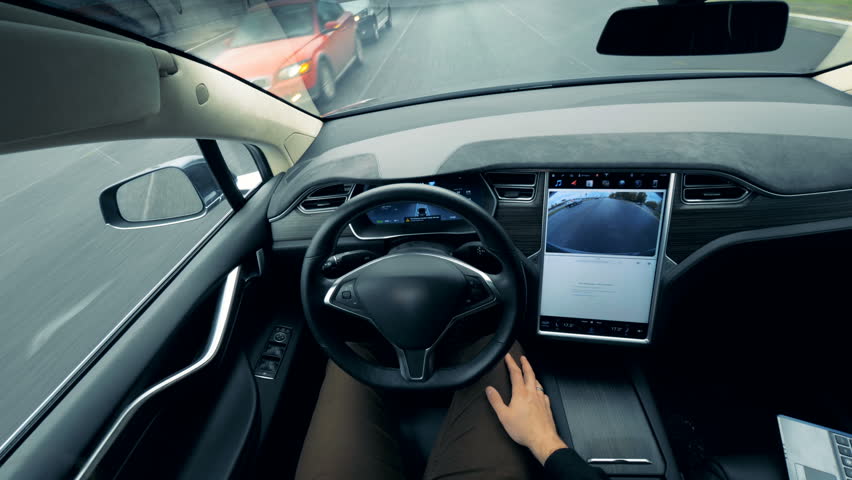
The injection of capital is primarily aimed at moving technology beyond Level 2 (Partial Automation, requiring constant driver monitoring) and Level 3 (Conditional Automation, still requiring driver takeover) toward the commercially transformative levels.
A. Focusing on Level 4 High Automation
Level 4 vehicles can perform all driving tasks under specific conditions (the ODD) without any human intervention. This is the current sweet spot for commercial investment because it offers the first real economic return from removing the driver from a defined route. The capital is being used to:
A. Expand Geo-Fenced Areas: Systematically map and validate new operational zones for commercial services, from new cities for robotaxis to new interstate corridors for trucking.
B. Redundancy Engineering: Building multiple, independent subsystems (braking, steering, power) to ensure that if one component fails, the system can still safely complete a Minimal Risk Condition (e.g., pulling over to a safe stop). This is a costly but non-negotiable step for Level 4 deployment.
B. The Challenge of Level 5 Full Automation
Level 5 represents full autonomy in all conditions and environments, effectively removing all constraints. While the investment is indirect, the learnings and technological breakthroughs from Level 4 deployment—particularly in AI and sensor fusion—are the foundational steps toward Level 5. Investors recognize that the company which achieves reliable Level 5 will capture a near-monopoly on the entire global mobility sector.
IV. Broader Economic and Regulatory Implications
The massive capital flowing into driverless tech is having profound ripple effects across several related industries and forcing legislative change.
A. Interplay with Smart Infrastructure (V2X)
Autonomous vehicles are exponentially safer and more efficient when they can communicate with their environment—a concept known as Vehicle-to-Everything ($\text{V}2\text{X}$).
A. Roadside Sensors: Investment is supporting city infrastructure projects that deploy roadside sensors, smart traffic lights, and connected digital mapping systems that provide AVs with a wider, more accurate view than their onboard sensors alone can offer.
B. 5G and Low-Latency Communication: The widespread deployment of 5G networks is critical, as high-speed, low-latency communication is essential for V2X data exchange, remote operations support, and instant software updates.
B. New Monetization Models: Mobility-as-a-Service (MaaS)
Capital is backing companies that shift the focus from selling a vehicle to selling a service. The MaaS model treats transportation as an on-demand utility, which is only truly feasible with autonomous fleets.
A. Reduced Operational Costs: Autonomous fleets drastically reduce the cost-per-mile by eliminating the most expensive operational input: the driver’s salary. This lower operating cost enables highly competitive and profitable ride-hailing and logistics services.
B. Predictive Maintenance: AI-driven diagnostics allow for vehicles to self-report impending failures, moving maintenance from reactive to predictive, which increases uptime and lowers long-term fleet costs, further justifying the initial high investment.
C. Regulatory Confidence and Public Trust
The scale of investment acts as a sign of confidence that helps sway public opinion and government regulators. Large capital rounds fund not only technology but also the extensive safety testing, lobbying, and public education campaigns necessary to normalize driverless technology on public roads. As more investment is secured, more miles are driven (both virtually and physically), generating the safety data required to establish new, national operating frameworks for autonomy.
Conclusion
In conclusion, the renewed torrent of investment capital into driverless technology is far from mere speculative enthusiasm. It is a strategic, calculated bet on the imminent and inevitable commercialization of Level 4 autonomy across trucking, ride-hailing, and logistics. Backed by demonstrable technological progress in AI, sensor cost reduction, and sophisticated redundancy engineering, the flow of capital is accelerating the timeline for a fundamental shift in global mobility. The firms that capture this moment and execute on scaling their technology will not only deliver massive returns to their investors but will permanently reshape the economic and safety landscape of the $10$ trillion global transportation industry.