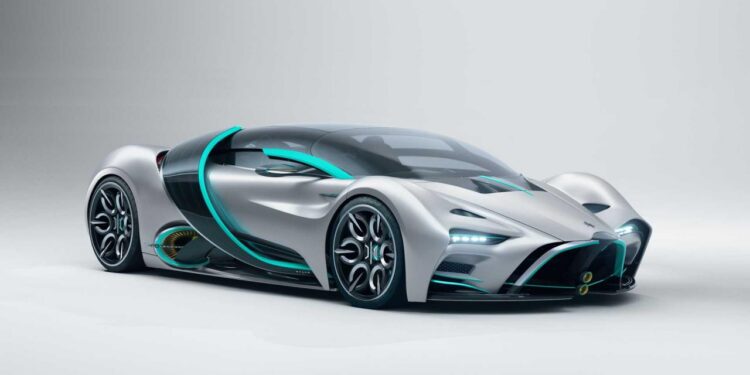
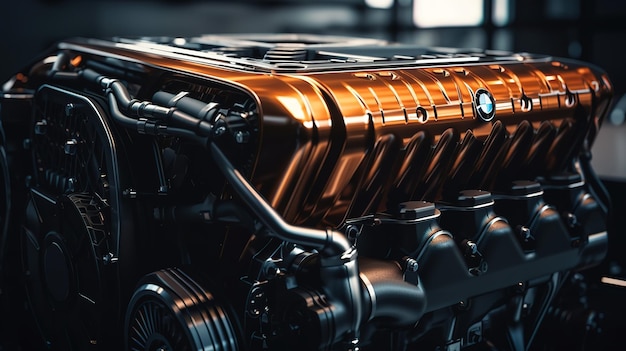
The luxury automotive world, a domain traditionally dominated by highly skilled human artisans and decades of engineering tradition, is now undergoing an unprecedented transformation driven by Artificial Intelligence (AI). Specifically, Generative AI is not merely assisting designers and engineers; it is becoming a co-creator, fundamentally redefining the process of conceiving, engineering, and manufacturing high-end vehicles. This is more than a technological upgrade; it is a strategic race among premium manufacturers to unlock new levels of performance, efficiency, and hyper-personalization, all while drastically shortening the product development lifecycle. The companies that master this digital partnership are poised to own the future of exclusive, cutting-edge mobility.
I. The Rise of Generative Design in High-End Motor Vehicles
Generative Design is a process where engineers input goals and constraints—such as material type, manufacturing method, cost targets, and performance criteria (e.g., maximum torsional stiffness, minimum weight)—into an AI system. The AI then uses machine learning algorithms to autonomously generate thousands of optimal design solutions that a human designer might never conceive.
A. Redefining Structural Efficiency and Weight Reduction
In luxury and high-performance vehicles, every gram saved enhances speed, efficiency, and handling. AI excels at topology optimization, leading to radically lighter, yet stronger, components.
A. Chassis and Suspension Components:
Generative AI designs complex, organic-looking lattice structures for components like suspension mounts, brake calipers, and even parts of the subframe. These designs mimic biological structures, placing material only where it is absolutely necessary for strength, resulting in parts that are significantly lighter than their human-designed counterparts, often by 20% to 40%. This reduces the vehicle’s unsprung mass, dramatically improving ride quality and dynamic handling—a crucial aspect of luxury performance.
B. Battery Pack Architecture:
For Electric Vehicles (EVs), the battery is the single heaviest component. AI is optimizing the internal structure of battery packs to maximize cooling efficiency and structural rigidity. It determines the optimal placement and shape of cooling channels and support ribs, which is vital for battery longevity and fast-charging performance. This holistic structural design is critical for achieving the high safety and performance standards expected in the premium segment.
C. Material Utilization and Cost Reduction:
By only using the minimum necessary amount of specialized materials (like carbon fiber or high-strength aluminum), AI not only saves weight but also leads to substantial cost reduction and a more sustainable manufacturing process, aligning with the luxury market’s increasing focus on ethical production.
B. The New Frontier of AI-Driven Aerodynamics
Aerodynamics is the silent battleground for efficiency and top speed, especially in the era of electric vehicles where range is paramount. Generative AI is capable of simulating airflow and generating optimized shapes at speeds impossible for human teams using traditional Computational Fluid Dynamics (CFD) software.
A. Seamless Exterior Surface Optimization:
Designers can feed the AI a basic aesthetic concept, and the system will iteratively modify subtle curvatures, panel gaps, and body lines to reduce the drag coefficient ($C_d$) to its absolute minimum. This allows for forms that are both aesthetically pleasing and thermodynamically perfect.
B. Adaptive and Active Aero Elements:
AI is designing highly sophisticated active aerodynamic systems. These include morphing body panels, automatically deploying spoilers, and adjustable air vents that change shape in real-time based on speed, steering angle, and battery temperature. The AI generates the mechanisms, control algorithms, and structural integrity for these moving parts simultaneously.
C. Virtual Wind Tunnel Analysis:
Using Physics-Informed Machine Learning (PIML), AI models can predict aerodynamic performance with high accuracy in seconds, offering a massive speed advantage over traditional CFD simulations, which can take hours or even days. This rapid feedback loop allows design teams to test thousands of variations, leading to genuinely ground-breaking shapes.
II. AI in Manufacturing and Hyper-Personalization
The influence of AI extends beyond the drawing board and into the factory floor and the customer relationship, leading to unprecedented levels of exclusivity and build quality.
A. Transforming the High-Precision Manufacturing Process
Luxury automotive manufacturing requires absolute precision. AI acts as a digital quality controller and efficiency manager, ensuring perfection at every stage.
A. Collaborative Robotics and Cobots:
AI-driven robots, or cobots, work seamlessly alongside human master craftsmen. AI vision systems guide these robots to perform highly delicate and repetitive tasks, such as applying specialized paint coatings or intricate interior stitching, with flawless consistency. This frees human workers to focus on complex, high-value assembly tasks that require human judgment and skill.
B. Predictive Maintenance for Zero Downtime:
Machine Learning (ML) algorithms analyze sensor data from manufacturing equipment in real-time. This predictive maintenance approach anticipates when a machine might fail—long before it actually does—allowing for scheduled repair and virtually eliminating unplanned downtime on the highly customized assembly lines, ensuring timely delivery of bespoke vehicles.
C. Quality Control and Defect Detection:
AI-powered visual inspection systems use high-resolution cameras to check thousands of vehicle parameters in seconds, identifying even microscopic flaws in paint finish, material alignment, and panel fitment that human eyes might miss. This sets a new benchmark for build quality and consistency in the premium segment.
B. Mass Customization and the Digital Twin
Generative AI is the key to unlocking true mass customization, allowing manufacturers to produce unique, tailored vehicles at a scale and speed previously considered impossible.
A. Hyper-Personalized Vehicle Configuration:
Customers can use AI-driven configurators that utilize Natural Language Processing (NLP) to translate abstract requests (e.g., “design a cabin with a sophisticated, warm, and tech-forward feel”) into real-time, photorealistic 3D renders. The AI ensures that all custom elements are physically and legally feasible, from specialized trim colors to unique interior layouts.
B. The Immersive Customization Experience:
Advanced Extended Reality (XR) platforms, powered by Generative AI, allow potential buyers to virtually “step inside” and interact with their custom-designed car using VR or AR headsets. This deeply immersive experience enhances emotional connection before the vehicle is even built.
C. Digital Twin for Lifetime Optimization:
Every customized vehicle comes with a Digital Twin—a complete virtual replica. This twin is used for constant monitoring, remote diagnostics, and the deployment of Over-The-Air (OTA) updates specific to that vehicle’s unique hardware and software configuration, ensuring the car improves over its entire lifespan.
III. The Strategic Value Proposition: Speed, Innovation, and IP
The integration of Generative AI represents a fundamental shift in the intellectual property (IP) and competitive strategy of high-end automotive brands.
A. Dramatically Shortened Product Development Cycles
The competitive window in the EV era is shrinking, making speed to market critical. AI dramatically accelerates the R&D timeline.
A. Rapid Concept Exploration:
Traditional automotive design cycles span four to five years. With Generative AI, concept iteration and initial engineering validation can be reduced from months to weeks or even days. The AI rapidly explores and validates thousands of design possibilities, allowing human designers to focus on refining the most promising and creative solutions.
B. Expedited Simulation and Testing:
AI-powered virtual testing and simulation—for crash safety, thermal management, and durability—significantly reduces the reliance on costly, time-consuming physical prototypes. This allows brands to bring groundbreaking features and entirely new vehicle architectures to market much faster than competitors relying on legacy processes.
C. Faster Regulatory Compliance:
AI systems can be trained on global safety and environmental regulations, ensuring that every generated design is compliant from the initial concept phase. This prevents expensive late-stage redesigns and rework, accelerating the final certification process.
B. Augmenting Human Creativity and Preserving Brand DNA
The fear that AI will replace human designers is unfounded in the luxury space. Instead, AI serves as a powerful augmentation tool, enabling human creativity to flourish without the constraints of iterative manual labor.
A. The Human-AI Design Partnership:
Designers use AI to quickly visualize abstract ideas, pushing creative boundaries far beyond traditional sketching. The human designer remains the visionary who sets the aesthetic and philosophical direction, while the AI handles the complex, optimization-driven engineering translation. This collaboration allows for the retention of unique Brand DNA while achieving unprecedented technical excellence.
B. Exploration of Unconventional Designs:
AI can generate forms and structures—often highly organic and lattice-like—that human intuition might overlook. This leads to vehicles with genuinely innovative and distinctive aesthetics, fulfilling the luxury buyer’s demand for exclusivity and unique visual identity.
C. Democratizing Engineering Complexity:
AI-driven design tools allow creative teams to quickly understand the engineering implications of their design choices (e.g., how a change in the roofline affects the battery range), fostering a deeper, more efficient collaboration between design, engineering, and manufacturing departments.
Conclusion
The luxury car industry’s embrace of Generative AI signals the end of an era defined solely by internal combustion and manual craftsmanship. The future vehicle is a masterpiece of both human artistic vision and machine-driven perfection, leading to products that are safer, lighter, faster, and more personal than anything that has come before. This technological pivot is the defining strategic imperative for the world’s most exclusive automotive brands.