

The transition to autonomous fleets is not merely a technological possibility; it is an economic inevitability. While the early stages of development were dominated by safety and regulatory hurdles, the current focus has decisively shifted to profitability and the massive Return on Investment (ROI) that driverless logistics promises. By eliminating the single largest operational expense—the human driver—and optimizing every facet of vehicle performance and utilization through Artificial Intelligence (AI), autonomous trucking and delivery services are poised to achieve levels of financial success previously unattainable in the logistics and transportation sectors. This deep dive explores the fundamental economic drivers, technological milestones, operational strategies, and financial implications of deploying truly profitable autonomous fleets.
I. The Core Economic Drivers of Profitability
The foundation of autonomous fleet profitability rests on leveraging technology to radically reduce costs and simultaneously maximize asset utilization.
A. Elimination of Labor Costs
The most significant and immediate financial benefit of autonomous fleets is the removal of the driver’s salary, benefits, and associated expenses, which typically account for 30% to 40% of a trucking company’s Total Operating Cost (TOC).
A. Continuous Operation: Human drivers are limited by strict Hours-of-Service (HOS) regulations, mandatory rest periods, and the fundamental biological need for sleep. Autonomous vehicles (AVs), conversely, can operate nearly 24 hours a day, 7 days a week. This capability allows logistics companies to drastically increase the daily distance covered by a single asset, boosting productivity by 100% or more. This increase in throughput, without proportional labor costs, exponentially drives profitability.
B. Reduced Training and Compliance Overhead: The costs associated with recruiting, training, certifying, and managing a large pool of commercial drivers—a demographic currently facing a severe shortage—are eliminated. AVs require remote monitoring personnel, but the ratio of AVs to human supervisors is high (potentially 50:1 or greater), making the labor spend negligible in comparison to traditional models.
C. Lower Accident and Insurance Costs: Though controversial in early stages, the ultimate goal of autonomous technology is a near-zero accident rate. AI-driven systems do not suffer from fatigue, distraction, or impairment. Over time, a demonstrable reduction in accidents and liability claims will lead to significantly lower insurance premiums and fewer costly service interruptions.
B. Optimization of Fuel and Maintenance Efficiency
Autonomous systems excel at operating vehicles with a level of precision and consistency that is impossible for human drivers, leading to substantial savings on fuel and wear-and-tear.
A. Hyper-Efficient Driving Patterns: AI drivers maintain perfect, steady speeds, optimize acceleration and deceleration, and leverage terrain and traffic data to achieve the most energy-efficient driving possible. They maximize regenerative braking and minimize harsh maneuvers. For diesel trucks, this translates to tangible fuel savings; for Electric Vehicles (EVs), it translates to extended range and lower charging costs.
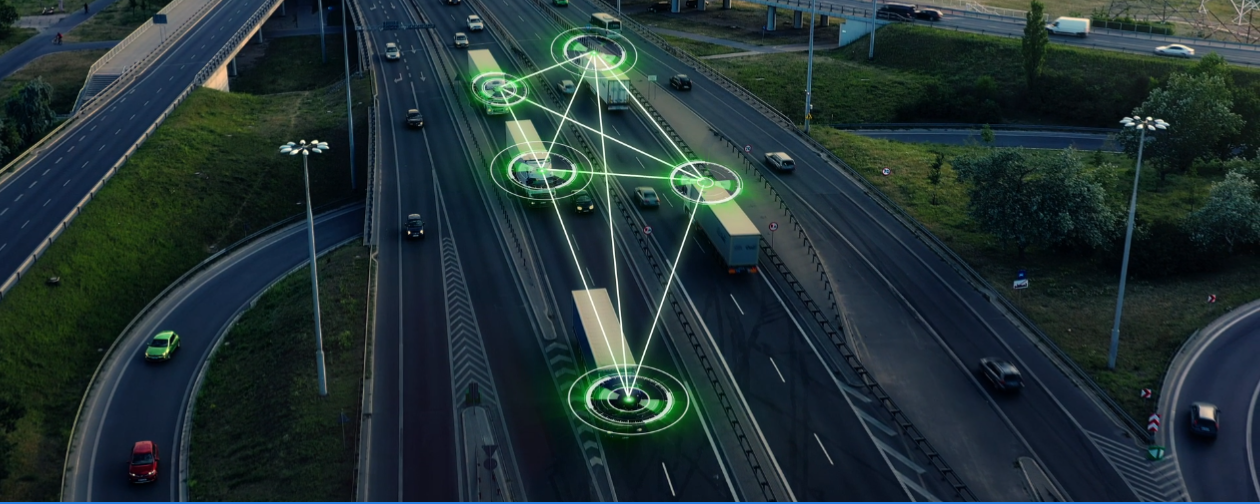
B. Advanced Platooning Technology: Autonomous trucks can execute platooning—driving in tight, electronically linked convoys. This practice dramatically reduces aerodynamic drag for all but the lead vehicle, leading to fuel savings of 5% to 15% for the entire platoon. This level of efficiency is impractical for human drivers due to safety distance requirements.
C. Predictive and Prescriptive Maintenance: AVs generate vast amounts of operational data about every component. AI algorithms use this data for predictive maintenance, scheduling service only when a component is actually nearing failure, rather than relying on arbitrary mileage intervals. This prevents catastrophic breakdowns, reduces costly emergency repairs, and maximizes the operational lifespan of the vehicle.
II. Technological Pillars Enabling Financial Success
The jump to profitability required specialized technological developments that ensure reliability, safety, and scalability.
A. Redundant and Robust Sensor Suites
For AVs to be profitable, they must operate reliably in all environments. This requires a sophisticated and redundant array of sensors that provide a comprehensive, 360-degree view of the environment.
A. High-Resolution Lidar Systems: Lidar (Light Detection and Ranging) provides precise, three-dimensional mapping regardless of lighting conditions. Modern fleets utilize solid-state Lidar, which is becoming cheaper and more reliable, ensuring accurate obstacle detection even at high speeds.
B. High-Definition Radar: Radar is essential for seeing through severe weather conditions (fog, heavy rain, snow) where Lidar and cameras may struggle. Its redundancy ensures the vehicle maintains operational safety and, therefore, remains in service to generate revenue.
C. AI Perception Stacks: The true value lies in the AI perception stack—the software that fuses data from all sensors. This stack must be capable of classifying, tracking, and predicting the behavior of every object (pedestrians, cars, debris) in real-time, enabling rapid, safe, and efficient driving decisions.
B. Cloud-Based Fleet Orchestration and Route Optimization
The successful management of thousands of AVs requires a highly centralized, AI-driven command system.
A. Dynamic Route Planning: The system uses real-time traffic, weather, road closure, and demand data to dynamically adjust routes mid-journey. Unlike static human planning, the AV fleet constantly reroutes to minimize transit time and maximize fuel efficiency, directly boosting on-time performance and customer satisfaction.
B. Seamless Hand-off Capabilities: In the initial phase of highway autonomy (where AVs drive autonomously on highways but require a human to manage first/last-mile urban driving), the system must execute safe and efficient hand-offs to human safety operators at transfer hubs. This ensures seamless continuity of operation and minimizes unproductive downtime.
C. Cybersecurity and Over-the-Air (OTA) Updates: Profitability depends on system integrity. Robust cybersecurity protocols are mandatory to protect against hijacking or data breaches. Furthermore, the ability to deploy OTA software updates allows fleets to rapidly deploy new performance features, bug fixes, and safety improvements without costly recalls or depot visits, maintaining maximum uptime.
III. Operational Model Shifts and Asset Utilization
Achieving significant profitability involves redesigning the traditional logistics operational model around the unique capabilities of AVs.
A. Hub-to-Hub Logistics
The most economically viable deployment model is hub-to-hub. This strategy focuses autonomy on long-haul highway segments, where driving is predictable, non-routine events are minimal, and the speed/distance benefit is maximized.
A. Maximizing Highway Miles: AVs drive between strategically located, purpose-built transfer hubs just outside major metropolitan areas. This maximizes the efficient, high-mileage portion of the journey.
B. Human Last-Mile Delivery: At the hub, the trailer is disconnected and attached to a traditional, human-driven local truck for the complex “last-mile” urban delivery. This hybrid model captures the biggest savings (highway labor) while maintaining flexibility for urban complexity.
C. Optimized Hub Design: Hubs are designed for rapid turnaround, with automated inspection stations and high-speed Megawatt Chargers (for electric AVs), ensuring the AV is back on the road in minutes, rather than hours, thereby maximizing its revenue-generating time.
B. Predictive Capacity and Demand Management
AI-driven forecasting allows fleet operators to manage capacity and pricing with unprecedented accuracy, minimizing deadhead (empty) miles and maximizing revenue.
A. Real-Time Pricing and Load Matching: The system can dynamically adjust freight pricing based on current asset availability, route congestion, and predicted demand, ensuring the fleet always commands the optimal price for its services.
B. Minimizing Deadhead Time: By integrating with central freight marketplaces, the AV orchestration software can intelligently position vehicles and schedule return trips to minimize the number of miles driven without a paid load, a key factor in boosting overall profitability per mile.
C. Increased Terminal and Depot Efficiency: Autonomous yard operations (e.g., self-driving yard trucks moving trailers) ensure assets are quickly staged for their next load, eliminating costly delays often caused by manual shunting and staging.

IV. Financial Metrics and Investment Landscape
The expected profitability is attracting enormous capital investment, validating the long-term economic outlook for autonomous logistics.
A. Key Financial Success Metrics
Investors and operators are focusing on new metrics that reflect the shift to a highly utilized, technology-driven asset base.
A. Revenue Per Available Mile (RPAM): A measure of how effectively the fleet is generating income from its total possible operational distance. Continuous operation dramatically increases the denominator (available miles) without proportionally increasing cost.
B. Total Cost of Ownership (TCO) Advantage: While the initial Capital Expenditure (CapEx) of an AV (due to expensive sensors and computing) is higher than a traditional truck, the drastic reduction in labor, fuel, and maintenance costs means the TCO over five years or less is significantly lower than an ICE truck. This financial reality makes the AV an indispensable asset.
C. Return on Invested Capital (ROIC) Velocity: Due to the continuous, 24/7 operation, the cash flow generated by an AV is far higher than a human-driven truck, allowing companies to pay off the capital investment much faster, dramatically increasing the ROIC velocity.
B. Insurance, Liability, and Regulatory Headwinds
While profitability is high, scaling requires navigating complex non-technical hurdles that affect the financial risk profile.
A. Shifting Liability: The liability in an accident shifts from the driver/operator to the technology provider/manufacturer. This requires new insurance products and regulatory frameworks that acknowledge the software, not the human, as the responsible agent. Clear liability frameworks are essential for stabilizing insurance costs and, therefore, profitability.
B. Regulatory Harmonization: Patchwork regulations across state and international lines are currently an impediment to cross-country logistics efficiency. Financial models assume a harmonization of federal and state regulations that permit continuous, unmanned operation across major trade corridors, unlocking the full economic potential of long-haul routes.
C. Public Acceptance and Trust: Sustained profitability relies on public trust. Investment in robust safety verification, transparent data sharing, and public education campaigns is crucial to ensure that societal and regulatory acceptance does not create unexpected operational roadblocks.
In conclusion, the era of autonomous fleets is defined by economic optimization. By fundamentally eliminating the largest variable cost (labor) and utilizing AI to achieve near-perfect operational efficiency, safety, and asset utilization, driverless technology transforms the logistics industry from a margin-pressured sector into a high-throughput, high-margin, capital-intensive endeavor. The financial rewards for early adopters who successfully scale these operations are projected to be generational, cementing autonomous fleets as one of the most transformative commercial technologies of the decade.