
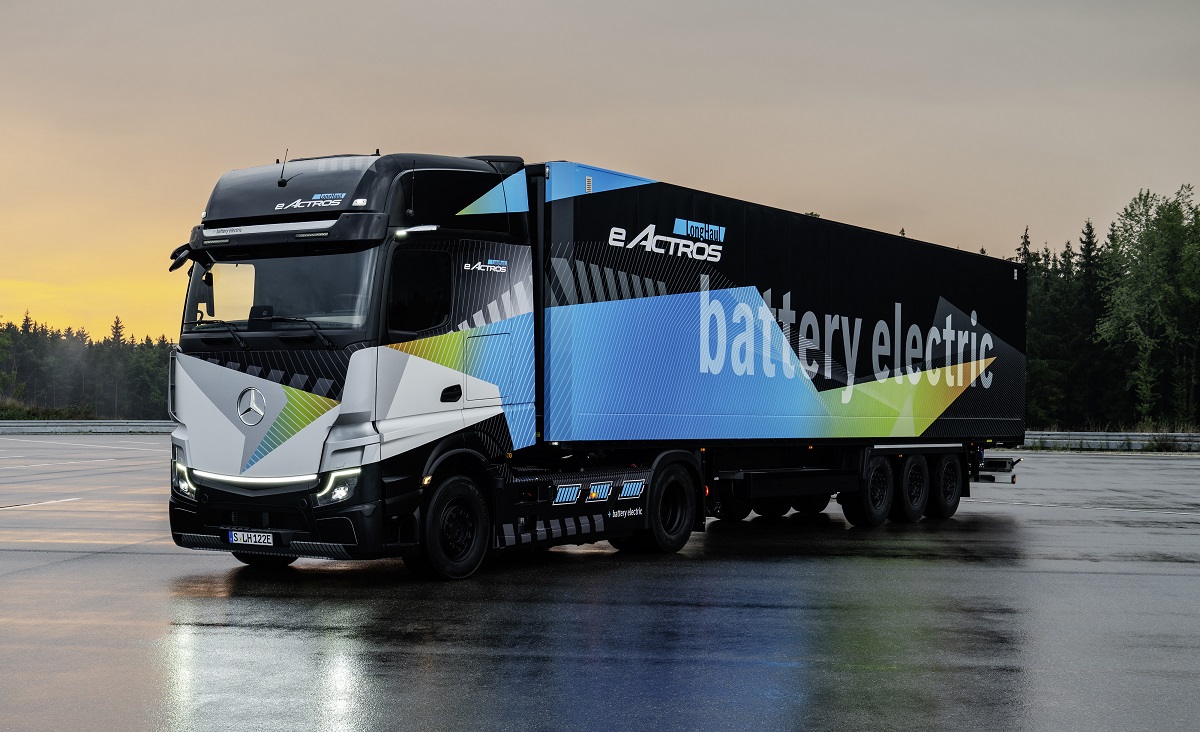
The global push toward sustainable logistics and decarbonization has placed the spotlight firmly on electric trucks. These zero-emission workhorses are poised to transform the freight and delivery sectors, offering compelling benefits in terms of reduced operating costs, lower noise pollution, and a significant decrease in carbon footprint. However, a formidable psychological barrier has historically slowed the widespread adoption, particularly in long-haul and heavy-duty applications: range anxiety.
This fear—the worry that an electric vehicle will run out of power before reaching its destination or a charging point—has been a major constraint for fleet operators and drivers. Fortunately, a confluence of rapid technological advancements, massive infrastructure investment, and innovative operational strategies are collectively tackling this issue, signaling that the era of range fear for electric trucks is swiftly coming to an end.
I. The Core Pillars of Range Anxiety Resolution
The transition from internal combustion engine (ICE) trucks to Battery Electric Vehicles (BEVs) is fundamentally different from the consumer EV adoption curve. Commercial vehicles require predictable uptime, consistent payload capacity, and reliable route planning. Solving range anxiety in this context demands a multi-pronged approach that addresses battery capacity, charging speed, and smart fleet management.
A. Quantum Leaps in Battery Technology
The most direct solution to range anxiety lies in increasing the distance an electric truck can travel on a single charge. Recent breakthroughs in battery chemistry and architecture have driven electric truck ranges to become competitive with their diesel counterparts in many duty cycles.
A. Energy Density Improvement: New battery chemistries, including solid-state and silicon-anode batteries, are pushing the limits of energy density. This means storing more kilowatt-hours () of energy within the same physical footprint and weight. For commercial trucks, where payload is king, this is critical, as it minimizes the weight penalty of the battery pack while maximizing range.
B. Optimized Battery Management Systems (BMS): Modern BMS are sophisticated, using advanced algorithms to optimize battery performance, longevity, and efficiency. They manage cell temperatures, charging/discharging rates, and state-of-charge prediction with extreme precision. This accurate prediction, often termed “Intelligent Range” or similar, gives drivers real-time, trustworthy data on how far they can genuinely travel, factoring in variables like terrain, temperature, and payload, thus building confidence and alleviating anxiety.
C. Modular and Scalable Battery Packs: Manufacturers are increasingly designing trucks with modular battery systems. This allows fleet operators to purchase a configuration tailored to specific needs—a smaller, lighter pack for urban or regional short-haul routes, or a massive pack for cross-country logistics. This ‘right-sizing’ of the battery prevents carrying unnecessary weight and cost, which directly impacts energy efficiency and financial viability.
B. The Megawatt Charging Revolution
Increased battery capacity is only half the equation; charging time is the other. The lengthy downtime associated with charging was a primary concern for high-utilization commercial fleets. The development and deployment of the Megawatt Charging System (MCS) is the game-changer for heavy-duty electric trucks.
A. Unprecedented Charging Speeds: The MCS standard is designed to deliver power levels up to 3.75 Megawatts (MW). For an electric semi-truck with a large battery pack (e.g., 600 or more), this means a 20- to 45-minute stop can replenish hundreds of miles of range. This time frame aligns closely with mandatory rest and break times for truck drivers, effectively turning the necessary break into a productive charging session, virtually eliminating charging-induced delays.
B. Standardized Global Infrastructure: The MCS is being developed as a global standard, ensuring that trucks from different manufacturers can charge at any MCS-equipped station. This standardization is crucial for encouraging infrastructure investment and ensuring interoperability across different countries and continents, giving fleet operators confidence in long-distance route planning.
C. Charging Hubs and Corridors: Private companies and government bodies are collaborating to build Megawatt Charging Hubs strategically along major freight corridors. These hubs are designed not just for power, but for volume, featuring multiple high-power stalls and amenities tailored for professional drivers, ensuring that demand can be met efficiently.

II. Smart Technology and Operational Strategies
Range anxiety is often a psychological issue rooted in uncertainty. Advanced telematics, data analysis, and fleet management tools are providing the certainty needed to overcome this fear.
A. Intelligent Route and Charging Planning Software
Modern fleet management systems are integrated directly with the vehicle’s battery and the broader charging network. They do more than simply point to the nearest charger.
A. Dynamic Range Calculation: Software takes into account real-time conditions such as weather, altitude changes, traffic congestion, and the vehicle’s current load to constantly recalculate the most accurate remaining range. This level of detail removes the guesswork from driving.
B. Optimized Charging Schedules: These systems pre-plan the entire route, suggesting optimal charging stops based on factors like charging speed at a specific location, current queue times, and electricity cost, ensuring maximum operational efficiency and minimizing downtime.
C. Integration with Logistics Chains: The charging schedule is now a seamless component of the overall logistics chain, rather than an external obstacle. The planning software can interface with dispatch and scheduling systems to ensure the vehicle is charged and ready exactly when needed for its next load.
B. Driver Training and Regenerative Braking Mastery
The driver plays a crucial role in maximizing the range of any electric vehicle, especially a heavy truck. Comprehensive training programs are key to instilling confidence and eliminating wasteful driving habits.
A. Mastering Regenerative Braking: Electric trucks utilize regenerative braking, which captures kinetic energy during deceleration and feeds it back into the battery. Training drivers to anticipate traffic and terrain allows them to maximize ‘regen,’ essentially giving them ‘free’ miles. In urban and mountainous environments, this can significantly extend the effective range.
B. Efficient Driving Techniques (Eco-Driving): This includes maintaining optimal speeds, smooth acceleration and deceleration, and minimizing unnecessary use of high-power accessories like HVAC. When drivers see a direct, positive correlation between their driving style and their remaining range, their anxiety evaporates.
C. Leveraging Telematic Feedback: In-cab displays and post-trip reports provide drivers with instant feedback on their energy consumption and regeneration performance, incentivizing and guiding them toward more efficient driving over time.

III. Addressing Specialized Concerns for Electric Trucks
While passenger EVs and light-duty electric trucks benefit from the core improvements, heavy-duty applications face unique challenges that require dedicated solutions.
A. The Impact of Payload and Towing
The weight of the load and aerodynamic drag from trailers have a significant, non-linear impact on electric truck range.
A. Intelligent Payload Compensation: Sophisticated software is being developed to accurately model the effect of different loads and trailer types on energy consumption, adjusting the range estimate accordingly. This ensures the driver is never operating with a false sense of security.
B. Aerodynamic Trailer Design: Trailer manufacturers are adapting their designs to the unique needs of electric trucks, utilizing advanced aerodynamics, low-rolling-resistance tires, and even active aerodynamic elements (like deployable tail sections) to minimize drag and preserve battery charge.
B. The Role of Auxiliary Power Units and Grid Stability
Long-haul electric trucks require power not just for propulsion, but also for auxiliary functions (e.g., sleeper cab climate control, refrigeration units).
A. Dedicated Low-Voltage Systems: Advanced battery architecture separates the high-voltage propulsion system from a dedicated low-voltage system for auxiliary functions. This ensures that essential systems can run without significantly draining the main propulsion battery, easing driver worry during rest stops.
B. Vehicle-to-Grid (V2G) and Vehicle-to-Everything (V2X): Electric trucks, with their massive batteries, are becoming mobile energy storage assets. V2G technology allows trucks to feed power back into the grid during peak demand times, turning the truck from a charging drain into a profit-generating asset. Furthermore, V2X communication allows trucks to communicate with smart infrastructure and other vehicles for energy-saving platooning and route optimization.
IV. The Market Reality: Moving Beyond Anxiety
The tangible results of these technological and strategic advancements are already visible in the commercial vehicle market. The year 2025 is proving to be a watershed moment where electric trucks transition from niche-market solutions to viable, mainstream competitors for a growing number of duty cycles.
A. Fleet Electrification Commitment: Major logistics, retail, and transportation companies are making massive, public commitments to electrify their fleets. This institutional confidence is built on successful pilot programs that have debunked the myth of insurmountable range anxiety. For example, the increasing availability of long-range models with ranges approaching or exceeding 400 miles (640 kilometers) makes daily operational planning much more flexible.
B. Financial Incentives and Total Cost of Ownership (TCO): Government incentives, combined with the significantly lower fuel and maintenance costs of electric trucks, are making the TCO highly favorable compared to diesel. This economic driver further accelerates the adoption rate, which, in turn, fuels more investment in infrastructure. The faster the infrastructure expands, the lower the range anxiety for all users.
C. The Hydrogen Fuel Cell Truck (FCEV) Bridge: For the most demanding, ultra-long-haul routes where current battery technology still faces TCO challenges, Fuel Cell Electric Vehicles (FCEVs) offer a compelling zero-emission alternative. FCEVs use hydrogen to generate electricity, offering very long ranges and fast refueling times, thus acting as a crucial complement to BEVs in the overall decarbonization strategy and further eliminating range-related concerns across all trucking segments.
Conclusion
The once-dominant fear of running out of charge in an electric truck is now being systematically dismantled. Through engineering breakthroughs in battery technology, the deployment of game-changing charging infrastructure, and the intelligent application of data-driven fleet management, the new generation of electric trucks is proving that zero-emission transport can be as reliable, and often more efficient, than its fossil-fueled predecessors. The road ahead for electric trucking is long, but range anxiety is no longer a stop sign—it is merely a historical footnote.